

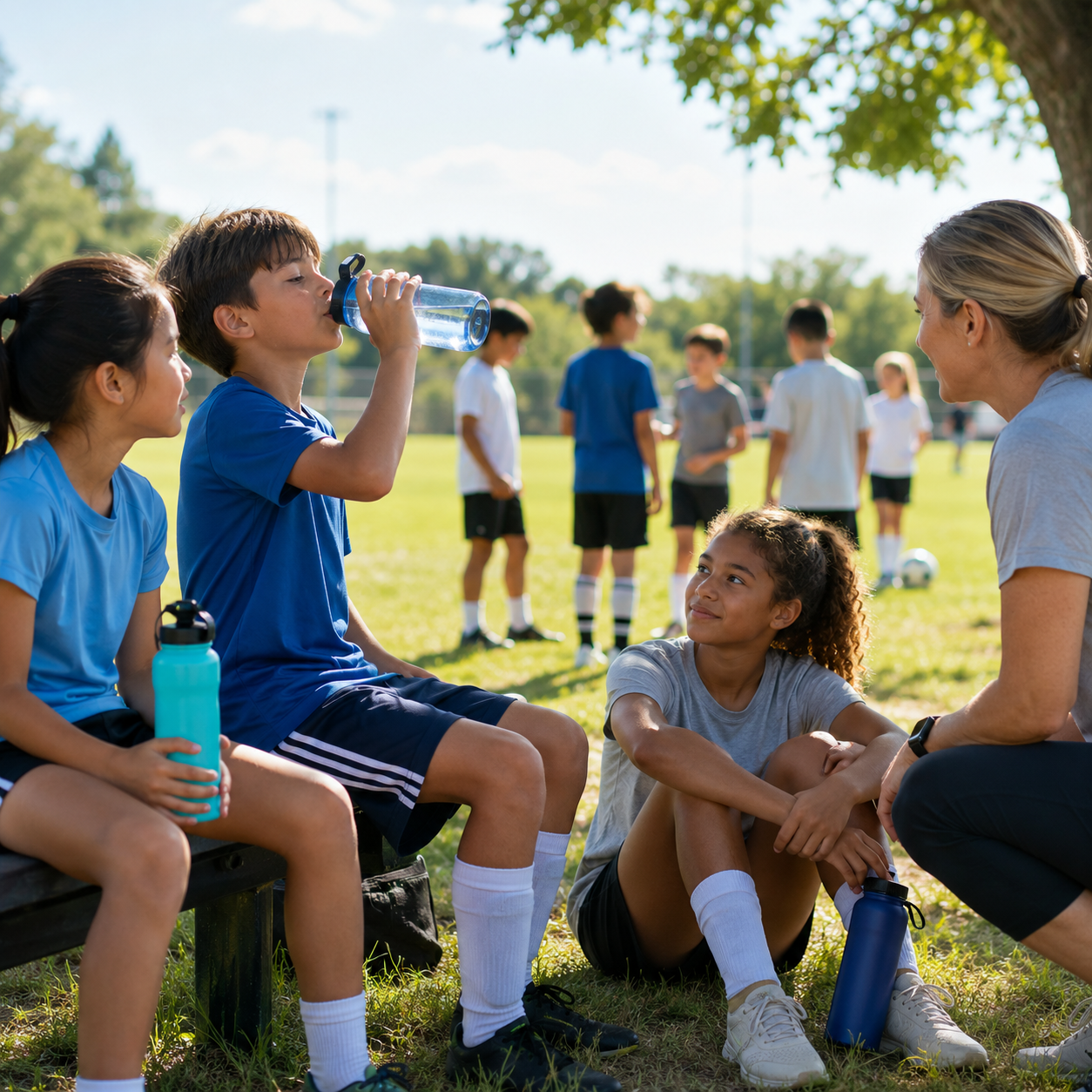
Back to school time means return of sports and other outdoor activities. Here are tips on keeping your family safe from heat and dehydration during these hot August days!How to Keep Your Child Hydrated
Before activity:
• Have your child drink water in the hours leading up to practice or a game.
• A good goal is about 1–2 cups (8–16 oz) of water 1–2 hours before activity.
During activity:
• Children ages 9–12: Aim for about 1–3 cups (10–25 oz) of water per hour.
• Teenagers: Aim for about 4–6 cups (34–50 oz) per hour during intense exercise in the heat.
• Encourage drinking at every break — do not wait until your child says they are thirsty.
• For activities lasting less than 1 hour, water is enough.
• For activities lasting longer than 1 hour, a sports drink with electrolytes may be helpful.
After activity:
• Have your child drink water or a sports drink after exercise to replace what was lost.
• A general rule: replace about 125%–150% of the fluid lost during activity.
• A simple check: if your child’s urine is pale yellow, they are well hydrated. Dark yellow urine means they need more fluids.
What NOT to drink:
• Energy drinks and caffeinated beverages are not recommended for children and teens during exercise.
Tips to Prevent Heat Illness
• Ease into it. At the start of the season, allow 7–14 days for your child’s body to adjust to exercising in the heat. Start with shorter, less intense sessions.
• Dress smart. Have your child wear lightweight, loose-fitting, light-colored clothing.
• Time it right. When possible, schedule activities during cooler parts of the day (early morning or evening). Avoid the hottest hours (10 AM–4 PM).
• Take breaks. Rest in the shade or a cool area during breaks. Coaches should schedule regular water and rest breaks.
• Watch the weather. On very hot and humid days, activities should be shortened or canceled.
• Watch for illness. A child who has been recently sick (fever, stomach bug) is at higher risk. Keep them home until fully recovered.
• Know your child. Children who are overweight, not in shape, or new to a sport are at higher risk and need extra attention.