

Worried about dementia for yourself or your parents? I want to share some good news: dementia is not an inevitable part of aging. Here are some practical steps that may help lower your risk and support your brain health.
Move!
- Regular exercise supports heart and brain health and is associated with a lower risk of dementia. Rundek and Du, Stroke, 2026, review the evidence linking physical activity and cognitive health.
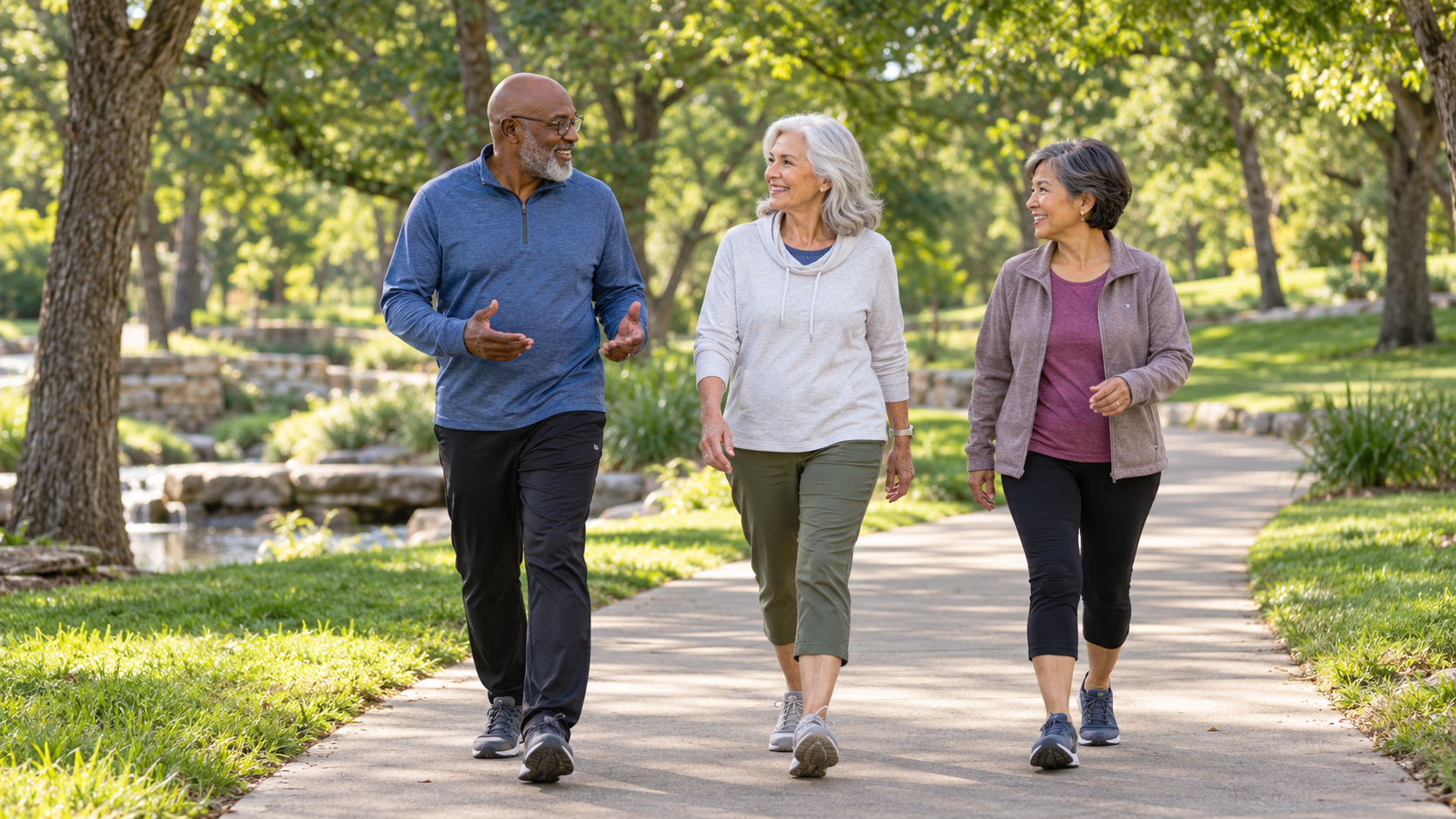
- Aim for at least 150 minutes of moderate-intensity activity each week, such as brisk walking. Include muscle-strengthening activity on at least two days a week. Older adults should also include balance activities. Start with what your health and abilities allow, and build gradually. See the CDC’s activity recommendations.
Eat for Your Brain
- Choose a MIND-style eating pattern with plenty of vegetables, leafy greens, berries, whole grains, nuts, beans, fish, and olive oil.
- Limit red and processed meat, fried foods, sweets, and ultra-processed foods. Avoid tobacco and alcohol.
- These eating patterns have been linked to better cognitive outcomes in observational studies, as discussed in Alexander and colleagues’ 2026 ACC scientific statement. But the MIND diet has not been proven to prevent dementia: a three-year randomized trial found no significant difference in cognitive change between the MIND-diet and comparison groups.
Keep Your Doctor Appointments
- Work with your doctor to manage your cholesterol, blood sugar, weight, and especially blood pressure. These are important parts of caring for both your heart and your brain.
- Keep up with hearing and vision care. Hearing loss and untreated vision loss are among the potentially modifiable factors linked to dementia risk in the 2024 Lancet Commission report.
- Ask whether you are up to date on the shingles vaccine. Emerging research has linked shingles vaccination with a lower risk of dementia, but more research is needed. Vaccination is recommended to prevent shingles and its complications, not as an established dementia-prevention treatment. Your doctor can advise whether it is appropriate for you.
Keep Learning and Stay Connected
- Keep learning: read, play games or a musical instrument, take a class, or learn a language.
- Stay connected with friends, family, and your community. Social isolation is linked to a higher risk of dementia, and meaningful connection is an important part of overall well-being.
The Bottom Line
No single change guarantees prevention. Combining healthy habits may help lower your risk and support your overall health.
If you are ready to talk about which of these steps matter most for you and how to get started, call 817.346.4000 or schedule a consultation.